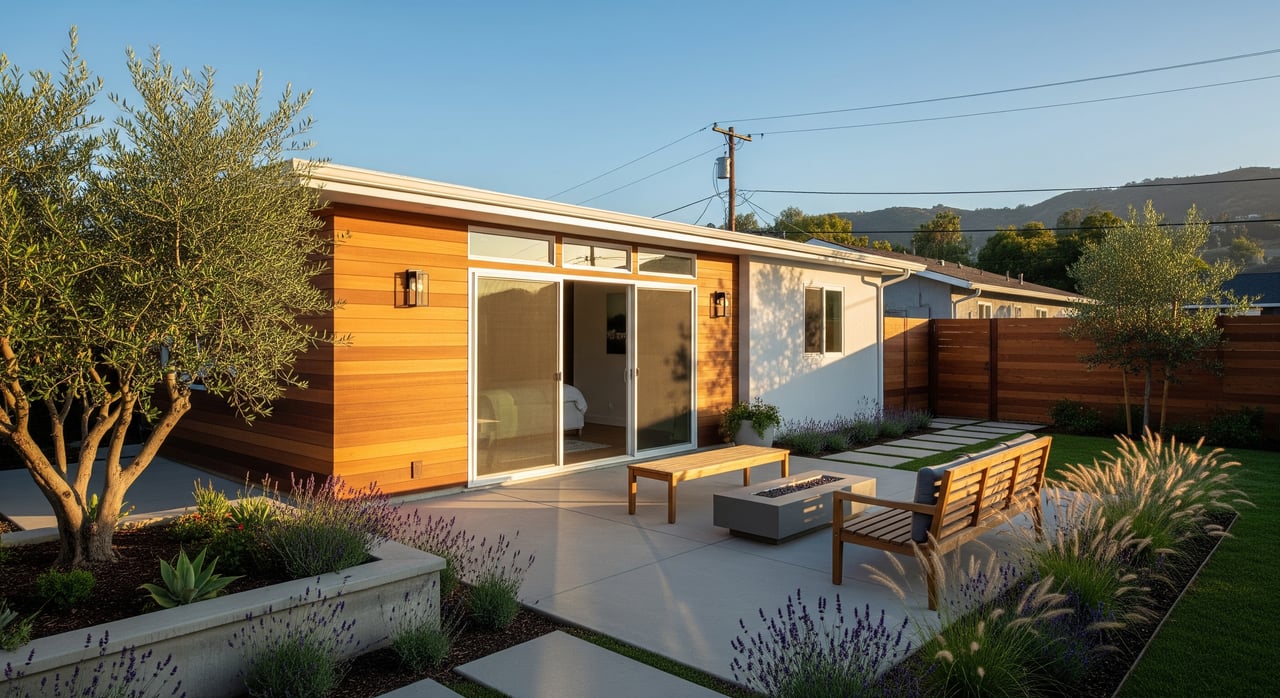
Thinking about adding an ADU to your Studio City home? You are not alone. ADUs can create flexible space for family, long-term guests, or rental income, but the rules and costs can feel overwhelming. In this guide, you will learn the essentials for Studio City inside the City of Los Angeles, from what is allowed to budget, timelines, and key pitfalls to avoid. Let’s dive in.
ADU basics in Studio City
Studio City is within the City of Los Angeles, so your project follows California ADU law and Los Angeles city agencies. State law requires ministerial review for most ADUs, which means objective standards and no subjective design review for typical projects. You still need to follow local building, safety, and utility rules.
Common ADU types include detached ADUs, attached ADUs, garage conversions, and Junior ADUs (JADUs) inside the main home. A JADU is usually up to 500 square feet. Detached ADUs are commonly capped at up to 1,200 square feet, subject to zoning and lot specifics. Many single-family parcels may allow one ADU plus one JADU.
For zoning and parcel specifics, start with the City of Los Angeles departments: LADBS for permits, City Planning for zoning and overlays, and state guidance from HCD on ADU statutes.
Parking, occupancy, and rentals
Parking requirements for ADUs are limited under state law. In many cases, you do not need to add parking for an ADU, including when your property is within a half-mile of public transit, the ADU is within the existing structure, or on-street permit parking is restricted. In Studio City, proximity to transit along Ventura Boulevard and other corridors often helps qualify for a parking waiver.
Owner-occupancy rules have been relaxed by state law, so many ADUs can be rented to third parties. Always confirm parcel-specific conditions and any HOA or CC&R rules that may set additional standards.
Flat lot vs hillside: why it matters
Studio City has two common profiles: relatively flat lots near Ventura Boulevard and hillside pockets north of Ventura.
- Flat lots: Often simpler and faster. Access is easier, grading is minimal, and utility tie-ins are more straightforward. You may be able to do a garage conversion or a detached ADU with fewer engineering hurdles.
- Hillside lots: Expect added steps and cost. Hillside rules can trigger geotechnical reports, grading limits, special foundation design, and stricter height and setback standards. If your property is in a fire severity zone or near brush, the Los Angeles Fire Department may require defensible space, access standards, and in some cases sprinklers or specific exterior materials.
If you are unsure whether your property sits in a Hillside Overlay, Specific Plan, or high fire severity area, verify early with City Planning and the Los Angeles Fire Department.
Overlays, historic areas, and special plans
State ADU law sets the baseline, but local overlays still matter. If your parcel is in a designated historic area, a neighborhood conservation overlay, a Specific Plan, or certain hillside overlays, your ADU must meet those objective standards. In some cases, extra reviews may be required, which can extend timelines. Check your property’s status with City Planning.
Utilities and site work to plan for
ADUs need safe and compliant connections for electricity, water, sewer, gas, and drainage. Utility coordination can affect cost and schedule.
- Electricity and water: LADWP handles both. Smaller ADUs may use existing service, but larger builds or separate metering can require panel upgrades or new meters. Contact LADWP early.
- Gas: New or modified gas service must be coordinated with SoCalGas.
- Sewer: LA Sanitation (LASAN) reviews new or modified sewer connections. Some projects require a new lateral or repairs to an older line before final sign-off.
- Stormwater and grading: LADBS and the Bureau of Engineering review drainage and stormwater. Hillside or grading-heavy sites often require engineered solutions.
These steps can add weeks to months if you need service upgrades, right-of-way work, or street cuts. Build utility coordination into your timeline.
Permits and timeline: what to expect
Most Studio City ADUs go through ministerial review with LADBS. You will submit plans, complete checklists, and coordinate clearances with departments like City Planning, LASAN, LADWP, and the Fire Department when needed.
Typical plan submittals include:
- Site plan with property lines, structures, setbacks, access, and utilities
- Floor plans, elevations, and structural details
- Energy compliance (Title 24)
- Plumbing, mechanical, and electrical plans
- Geotechnical and grading plans for hillside or new foundations
- Sewer connection diagrams and fire access documentation as applicable
Real-world timing varies with completeness of plans and agency workload. For straightforward ADUs on flat lots, plan check to permit issuance often runs 2 to 6 months. Hillside or complex sites can take 6 to 12 months or longer if discretionary steps or utility work in the street are required. Construction often takes 2 to 6 months for a garage conversion or small attached unit, and 4 to 9 months for a detached ADU. Hillside builds can run 9 to 18 months end to end.
Budget ranges and key cost drivers
Every site is different, but these ranges help you plan:
- Garage conversion: about $50,000 to $150,000 when the structure is in good condition
- Attached ADU: about $150,000 to $350,000 depending on size and complexity
- Detached ADU on a flat lot: about $200,000 to $500,000+
- Hillside ADU: often 30 to 100%+ higher than a flat-lot equivalent due to geotechnical work, specialized foundations, and access
Design fees for architects and engineers commonly total 5 to 15% of construction cost. Plan checks, permits, and connection fees add several thousand dollars in most cases. Utility upgrades, sewer laterals, and public right-of-way work are frequent wild cards.
Primary cost drivers in Studio City include slope and retaining walls, required geotechnical or structural upgrades, older utility systems that need upgrades, and driveway or parking reconfiguration if you convert a garage.
Quick feasibility checklist
- Confirm your parcel is in the City of Los Angeles and pull zoning and overlay maps from City Planning.
- Check whether you are in a Hillside Overlay, Specific Plan, historic district, or fire severity zone with City Planning and the LAFD.
- Locate your sewer lateral, utility meters, and any easements; coordinate early with LADWP and LASAN.
- For hillside or sloped sites, plan for a geotechnical investigation.
- Assess parking and proximity to transit for potential parking waivers.
- Inventory your garage condition and size if you are considering a conversion.
- Get a feasibility review from an ADU-experienced architect and at least two contractor bids.
Common pitfalls to avoid
- Assuming state law removes all local rules. Always verify parcel-specific overlays with City Planning.
- Underestimating hillside costs. Fund soils and geotech early and plan for special foundations.
- Ignoring sewer and utility capacity. Coordinate with LASAN and LADWP at the start.
- Submitting incomplete plans. Follow the LADBS checklist to reduce plan-check cycles and delays.
- Overlooking HOA or CC&R implications. Review governing documents and seek legal guidance when needed.
Next steps
If you want to build an ADU in Studio City, start with a parcel and overlay check, then a simple feasibility study with an ADU-savvy architect. Coordinate early with LADBS, City Planning, LADWP, LASAN, the LAFD, and SoCalGas as your design takes shape. A complete, well-coordinated plan set is the fastest path to permits and a predictable build.
Ready for guidance tailored to your property, budget, and timeline? Get a practical game plan and vendor introductions that fit your goals. Connect with Tina Dagent to schedule a free consultation.
FAQs
How big can a detached ADU be in Studio City?
- Many detached ADUs are allowed up to 1,200 square feet, subject to zoning and objective standards set by the City of Los Angeles.
Do I need parking for an ADU near Ventura Boulevard?
- Often no. If your property is within a half-mile of public transit or the ADU is within the existing structure, the city cannot require additional parking under state rules.
How long does it take to permit an ADU in Los Angeles?
- For complete, straightforward submittals, plan check to permits commonly runs 2 to 6 months. Hillside or complex projects can take 6 to 12 months or more.
Can I rent out my ADU in Los Angeles?
- In many cases yes. State law limits local owner-occupancy restrictions, so ADUs are often rentable to third parties. Always verify any parcel-specific or HOA rules.
What does a garage conversion ADU cost in Studio City?
- A typical range is about $50,000 to $150,000, depending on the structure’s condition, systems, and desired finishes.
Are ADUs feasible on hillside lots in Studio City?
- Yes, but expect added steps, engineering, and cost for geotechnical work, special foundations, fire access, and drainage. Start with a feasibility study and soils report.