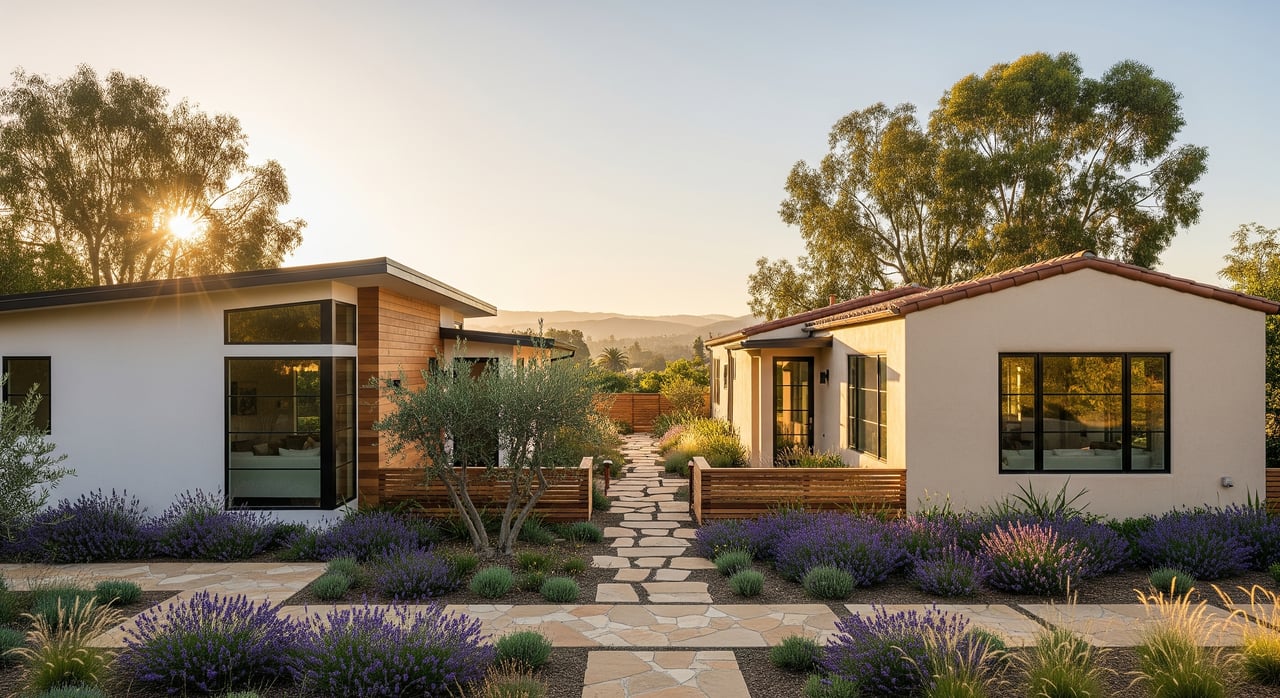
Thinking about splitting your Tarzana lot or adding a duplex under California’s SB 9? You are not alone. Many Valley homeowners and small investors are exploring whether a simple, by‑right path could unlock new value. The truth is, SB 9 can be powerful, but success depends on your parcel’s zoning, shape, slope, trees, utilities, and a few strict rules.
In this guide, you will learn what SB 9 allows, how Los Angeles applies it in Tarzana, where projects commonly get stuck, and how long approvals usually take. You will also get a practical checklist and sample scenarios so you can gauge feasibility before you spend real money. Let’s dive in.
What SB 9 allows in Los Angeles
California’s SB 9 created a ministerial path for two key outcomes on qualifying single‑family parcels:
- A ministerial lot split that creates two lots from one.
- Up to two residential units on a single‑family lot.
Used together, one original lot can become two parcels, and each parcel can hold up to two units. In the best cases, that is up to four total units. You can read the legal framework in California’s SB 9 law.
Core rules to know
- The 40/60 split rule. Each new lot must be between 40 percent and 60 percent of the original lot area. This is a hard constraint that often decides feasibility.
- Ministerial approvals. Reviews use objective standards and checklists, not subjective hearings, but you must meet every objective rule the City applies.
- Owner declaration. The law requires a signed applicant declaration related to occupancy intent for lot splits. Check current City procedures for exact wording and timing.
- Exclusions and denials. Parcels in certain sensitive areas or with historic protections can be excluded, and the City can apply objective standards for setbacks, height, lot coverage, and parking.
How Tarzana parcels fit SB 9
Tarzana is in the City of Los Angeles, so City SB 9 procedures and objective standards apply. Always verify parcel facts in the City’s ZIMAS property lookup tool and review current guidance from Los Angeles City Planning.
Zoning and lot geometry
Many Tarzana properties are zoned R1, RE, or RS. SB 9 applies to single‑family zones. Even on eligible parcels, the lot’s shape and dimensions matter. If the 40/60 rule produces one narrow or awkward lot, frontages and setbacks might make it hard to build two usable homes. Flag lots and reverse corners can be possible, but they bring access and layout challenges that affect design and costs.
Hillside and slope considerations
Parts of Tarzana sit on the valley floor, while others climb toward the Santa Monica Mountains and Topanga corridor. Hillside parcels can trigger Los Angeles hillside development standards, more grading controls, and geotechnical reporting. Steep slopes add cost for retaining walls, drainage, and foundations, which can turn a theoretical split into a marginal deal.
Fire, environmental, and trees
Some parcels near canyons may be in Very High Fire Hazard Severity Zones, which can add fire safety requirements through objective standards. SB 9 also does not override environmental protections. If your lot includes protected trees or sensitive resources, expect constraints on building footprints and grading. This can reduce buildable area and reshape your site plan.
Historic and private restrictions
Properties listed on local, state, or federal historic registers, or within certain historic districts, are typically not eligible for ministerial SB 9 approvals. Also review your title for any recorded CC&Rs that prohibit subdivision. A quick preliminary title report can save months of work if a recorded restriction blocks the path.
Parking, ADUs, and other laws
SB 9 reduces some parking barriers, but City objective parking standards still apply unless preempted. If you split a lot and pursue duplexes on each new parcel, parking can become a tight puzzle. ADU rules are separate from SB 9 and can be complex when combined with splits or duplexes. Before you assume extra units are allowed, confirm how the City counts units and applies coverage, height, and setback standards to each new parcel.
Utilities and frontage
SB 9 does not waive utility requirements. Expect independent or upgraded services for new parcels and units.
- Water. Most Tarzana homes are served by LADWP. New parcels and units often need new meters and plan checks. Start early with LADWP.
- Sewer. The City will review sewer capacity and laterals. Older Valley lines may be undersized or in poor condition. See connection guidance with LA Sanitation.
- Power and gas. Service upgrades are common for added units. LADWP and SoCalGas may require plan review. Transformer upgrades are uncommon for small infill, but possible.
- Stormwater. Expect low‑impact development measures and drainage planning in line with City requirements.
Process and realistic timeline in Los Angeles
SB 9 is ministerial, but multiple departments will review your plans. Plan on a sequenced process with objective checklists, technical studies where required, and a few rounds of corrections.
Typical steps
- Early parcel check
- Confirm zoning, overlays, and historic status in ZIMAS.
- Review the latest SB 9 materials from Los Angeles City Planning.
- Title and declarations
- Order a preliminary title report to screen for CC&Rs or recorded restrictions.
- Prepare the signed owner declaration that the City requires for SB 9 lot splits.
- Technical prep
- Get a boundary and topographic survey and a conceptual site plan that shows the split and building footprints.
- Prepare a tentative parcel map, tree inventory, and geotechnical scope if hillside.
- Outline water, sewer, power, and stormwater approaches.
- Submittal and plan check
- Submit to City Planning and route to reviewers like LADBS, LA Sanitation, and LADWP. Fire review may apply depending on location.
- Corrections, approvals, and recordation
- Address comments, resubmit, and move to approval.
- Record the final lot split documents with the County Recorder after City sign‑off.
How long it takes
Statute aims for a straightforward, objective process. In practice, expect several months. A common range for lot split approvals on simple, flat sites is 2 to 6 months from first submittal to recordation. If your project involves hillside standards, tree protections, utility upgrades, or additional engineering, build in more time.
Typical fees and studies
- City processing and plan check fees for the parcel map and building permits.
- Survey and title costs.
- Utility connection fees and potential meter upgrade costs.
- Sewer lateral replacement or upsizing if needed.
- Geotechnical reports for hillside or challenging soils, and arborist reports for protected trees.
Tarzana scenarios to benchmark your parcel
Sample Parcel A: flat, regular lot
A flat R1 lot of regular shape that divides cleanly under the 40/60 rule with standard frontages is a strong candidate. No historic flag, no protected trees in building areas, and existing water and sewer lines with capacity are all positive signs. On this kind of site, a split with up to two units per parcel is often practical.
Sample Parcel B: narrow or irregular lot
If the 40/60 split produces a very narrow second lot, setbacks and parking can limit what you can build. Protected trees in critical corners, small slopes, or shallow existing sewer laterals can add cost and delay. The project may still work, but returns get tighter and design compromises grow.
Sample Parcel C: steep hillside lot
A hillside parcel subject to added grading controls and geotechnical studies can be a poor SB 9 candidate. Even if you can split, the cost of retaining walls, access, fire safety, and site work may outweigh the value gained by a second lot.
Quick readiness checklist
Use this to gauge whether to take the next step.
- Run ZIMAS to confirm single‑family zoning and screen for overlays or historic status.
- Order a preliminary title report to check for CC&Rs that restrict subdivision.
- Walk the site for obvious slope, access, or tree conflicts. Capture basic photos and rough measurements.
- Review City SB 9 resources and forms from Los Angeles City Planning, then outline your target unit count and parking approach.
- Call LADWP about meters and LA Sanitation about sewer capacity early in the process.
- Get ballpark pricing from a surveyor and architect so you understand soft cost ranges.
Assembling the right team
SB 9 is objective, but you still need a capable team to move fast and avoid rework.
- Land use planner or expeditor familiar with LA SB 9 processes.
- Licensed surveyor or civil engineer for parcel maps and legal descriptions.
- Architect for site planning, building design, and parking solutions.
- Arborist and geotechnical engineer if trees or slope apply.
- General contractor to validate costs and constructability.
Next steps and how I can help
If you think your Tarzana property might qualify, start with a ZIMAS check and a short consult with City Planning or an experienced expeditor. Most deal‑killers reveal themselves early. For everything else, a focused plan can turn a long timeline into a manageable one.
You do not have to navigate this alone. I combine local market knowledge with permitting and construction literacy to help you stress‑test scope, timelines, and costs before you commit. If you want a clear, actionable plan for your parcel, schedule a conversation with Tina Dagent.
FAQs
What is SB 9 and how does it affect Tarzana single‑family lots?
- SB 9 allows a ministerial lot split and up to two units per qualifying single‑family parcel, which can create two lots and up to four total units when both pathways apply.
How does the 40/60 SB 9 lot split rule work in Los Angeles?
- Each new lot must be between 40 percent and 60 percent of the original lot area, which often decides whether two usable parcels with compliant setbacks and parking are possible.
Are Tarzana hillside properties eligible for SB 9 lot splits?
- Some are, but hillside standards, grading limits, and geotechnical requirements can reduce buildable area and raise costs enough to make a split impractical even if technically allowed.
Can I use SB 9 and still build ADUs in Los Angeles?
- ADU rules are separate, and combining SB 9 with ADUs is complex, so confirm how the City counts units and applies coverage, height, and parking to each new parcel before planning ADUs.
How long do SB 9 approvals and lot splits typically take in Los Angeles?
- Many straightforward projects see 2 to 6 months from first submittal to lot split approval and recordation, with longer timelines for hillside, tree, or utility‑intensive sites.
What utilities upgrades are common for SB 9 projects in Tarzana?
- New lots and units often need separate water meters, sewer lateral checks or upgrades, and power service adjustments, with stormwater measures required under City rules.