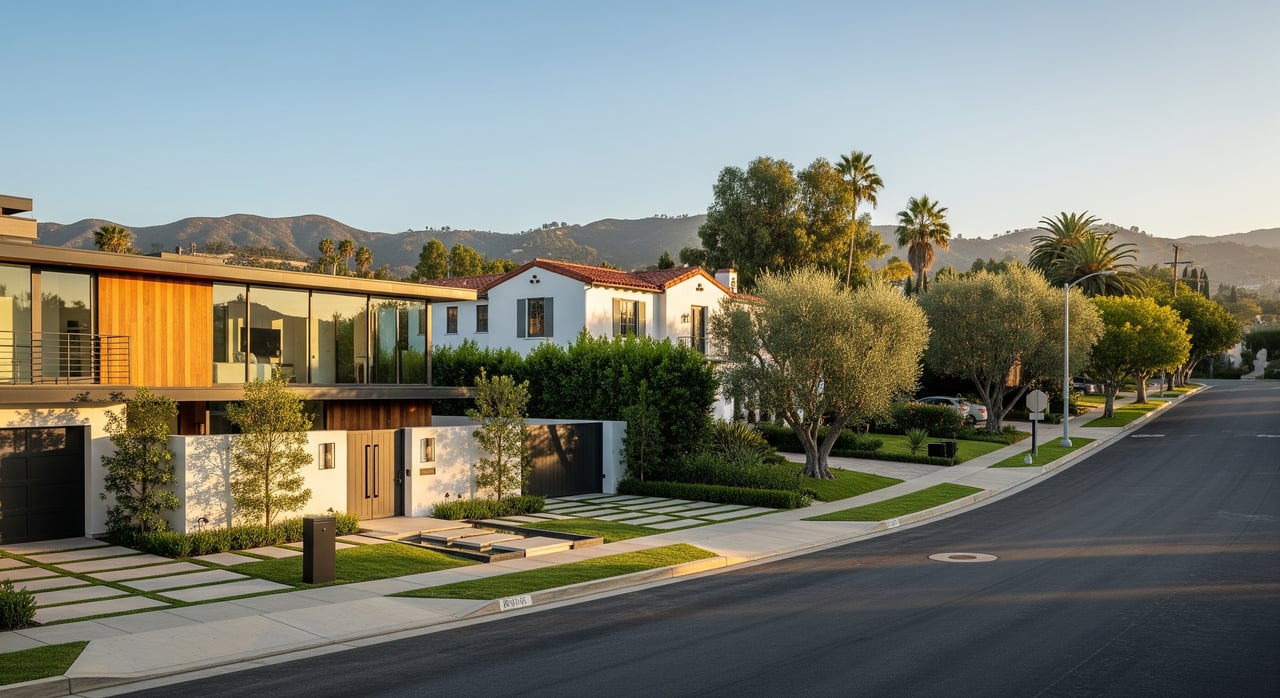
Trying to decide between Studio City and Sherman Oaks for your next move? You’re not alone. Both neighborhoods offer strong value in the San Fernando Valley, but they feel different on the ground and fit different priorities. In this guide, you’ll see how the vibe, housing, commutes, amenities, schools, and renovation potential compare so you can choose with confidence. Let’s dive in.
Neighborhood vibe at a glance
Studio City sits at the base of the Santa Monica Mountains with a boutique feel around Ventura Boulevard’s village pockets near Laurel Canyon and Tujunga. You get canyon trail access, smaller walkable clusters of cafés and shops, and a close connection to studio life around the CBS Studio Center area.
Sherman Oaks stretches immediately west along Ventura Boulevard. It has a more continuous retail corridor with larger shopping centers and a broader mix of services. Many blocks feel more conventional and family oriented, with a wider variety of everyday conveniences.
Homes and pricing patterns
In Studio City, you’ll find hillside single family homes, mid‑century designs, and luxury builds sprinkled through the canyons. There are also townhomes and garden‑style condos near Ventura Boulevard, plus some newer infill close to commercial nodes. Properties with views or Fryman Canyon access often command premiums.
In Sherman Oaks, larger flat‑lot single family homes are common, along with mid‑century tracts and a sizable inventory of condos and townhomes near major intersections. For comparable homes, Sherman Oaks often offers more square footage or lot size for the budget, while Studio City tends to trade at a premium in many desirable pockets.
Space, lots, and ADUs
If your goal is maximum living space or a bigger yard, Sherman Oaks typically makes it easier thanks to larger flat lots in many areas. Those lots also tend to be friendlier for expansions or adding an accessory dwelling unit, since city and state ADU rules are supportive and construction on flat terrain is more straightforward.
Studio City’s hillside settings deliver privacy and views, but they can add permitting and construction complexity. Steep grades, grading and drainage, and retaining walls can affect cost and timeline. If you love the canyon lifestyle, factor in these realities early and plan accordingly.
Commute and transportation
Both neighborhoods run along Ventura Boulevard and connect to the US‑101 for east‑west travel. Expect heavy peak congestion on both the freeway and Ventura Boulevard.
For studio work in Burbank, typical drives run roughly 10 to 20 minutes without heavy traffic from either neighborhood, with Studio City sometimes a touch closer to certain studio clusters. To Downtown Los Angeles, plan anywhere from about 25 to more than 60 minutes depending on time of day. To the Westside or Santa Monica, routes often use the 101 to the I‑405 or surface streets, which can take 30 to more than 60 minutes.
Bus service from Metro and LADOT runs along Ventura Boulevard and key cross streets, which can work for local trips. Neither area sits directly on a rail line. Walkability is strongest around Ventura Boulevard; interior residential streets are more car dependent.
Lifestyle and amenities
Ventura Boulevard is the backbone in both neighborhoods. Studio City offers intimate village nodes with boutique shops and cafés, plus Fryman Canyon trailheads for quick hikes and scenic loops. Dining mixes casual spots with some higher‑end options.
Sherman Oaks provides a longer, more continuous retail stretch with larger shopping centers, big‑box convenience, and a wide array of services. Nightlife is generally low‑key in both areas, with bigger venues in Hollywood or Burbank just a drive away.
Parks are accessible from both. Studio City shines for canyon access, while Sherman Oaks residents often frequent local parks and community gyms, with larger green spaces a short drive away.
Schools and safety basics
Both neighborhoods are served by LAUSD, and nearby private and specialty schools are available. Attendance zones and ratings can change, so verify the exact address you are considering and check current information directly with the district and school sites.
Crime patterns vary block by block and over time in both neighborhoods. Use official LAPD crime maps and local station updates to review recent trends near the specific streets you’re considering. Perception and reality can differ, especially along busy commercial corridors.
Renovation and build considerations
Studio City hillside homes can require additional planning for grading, drainage, and structural work. That can impact both budget and permit timelines. If you envision major updates, factor in engineering, soils, and access before you write an offer.
Sherman Oaks flat‑lot homes are often easier to expand, whether that means a primary suite addition, an open‑plan reconfiguration, or an ADU. Zoning along Ventura Boulevard supports multi‑family and commercial development, while interior residential streets tend to remain single family, so review lot setbacks and site specifics before committing to a scope.
Resale outlook
In Studio City, homes with hillside views, canyon proximity, and walkable access to village retail tend to maintain strong appeal. The boutique feel and entertainment industry adjacency can help support premium valuations.
In Sherman Oaks, larger lots and familiar floor plans attract buyers seeking space and practicality. With more inventory overall, strategic renovations and standout presentation can help your property rise above nearby comps when you are ready to sell.
Which is the better fit for you
Choose Studio City if you want:
- A boutique, village feel with canyon access and hiking.
- Hillside privacy, views, or proximity to studios.
- A premium setting that emphasizes character and location.
Choose Sherman Oaks if you want:
- More space or larger flat lots for the budget.
- A wider selection of single family homes and condos.
- Easier ADU or expansion potential on many properties.
If you are still on the fence, narrow by your daily life patterns. Map commute times at your actual departure hours. Walk the specific blocks you like in the morning and evening. Confirm school options for the exact address. Then weigh the tradeoffs that matter most to you.
How Tina helps you decide
As a move‑up buyer, you deserve more than a quick tour. You need clear advice on what the property can become and what it will take to get there. That includes realistic renovation scopes, permitting paths, ADU feasibility, and a marketing‑minded plan for future resale.
If you want a data‑minded partner who also understands construction and design, connect with Tina Dagent to compare target homes in Studio City and Sherman Oaks and move forward with confidence.
FAQs
How do home prices generally compare between Studio City and Sherman Oaks
- Studio City often trades at a premium for comparable single family homes, while Sherman Oaks typically offers more square footage or lot size for the same budget.
What are typical commute times from these neighborhoods to major job centers
- To Burbank studios, expect roughly 10 to 20 minutes without heavy traffic; to Downtown LA, about 25 to more than 60 minutes; to the Westside or Santa Monica, about 30 to more than 60 minutes depending on route and time of day.
Which area is better for adding an ADU or expanding a home
- Many Sherman Oaks properties sit on flat lots that are generally easier for additions or ADUs, while Studio City hillside homes can face steeper permitting and construction considerations.
How do condo and townhome options differ in Studio City and Sherman Oaks
- Sherman Oaks usually has a larger supply and broader price range in condos and townhomes, while Studio City’s condo options near village areas can command higher prices per square foot.
Is one neighborhood safer or more walkable than the other
- Both have mixed walkability, strongest near Ventura Boulevard, and crime varies by block and over time; review specific addresses using local walkability tools and official LAPD maps before you decide.