You picture dusky sunsets over the Valley, oak-scented mornings on a nearby trail, and a home that feels tucked away yet close to everything on Ventura. If Studio City hillside living has caught your eye, you are not alone. The lifestyle is special, but it also comes with stairs, parking nuances, and extra due diligence. This guide gives you the real day-to-day, the tradeoffs, and the checks that smart buyers make before they fall in love. Let’s dive in.
What “hillside living” means here
Hillside living in Studio City typically means homes north of Ventura Boulevard that climb into the Santa Monica Mountains foothills. Lots are often sloped and tree lined, with winding streets that rise toward Mulholland. Many properties are oriented to capture Valley, canyon, or distant skyline views. The Fryman Canyon trailheads and overlooks along Mulholland are a visible anchor for this lifestyle and a big part of why the hills feel so connected to nature. You can explore them at Fryman Canyon Park and the Nancy Hoover Pohl Overlook.
Daily life: the upside and the real talk
Views are parcel specific
Expect a mix of Valley panoramas, treed canyon vistas, and in a few ridge spots, hints of the urban skyline. Two neighboring homes can have very different outlooks based on orientation and tree cover. Privacy often comes from grade and vegetation rather than sheer distance. Walk the property at different times of day to understand sun, shade, and sightlines from key rooms and terraces.
Trails and outdoor rhythm
A major perk is instant access to hiking. The local network ties together Fryman Canyon Park and Coldwater Canyon Park with TreePeople. Residents use these trails for quick loops, dog walks, and post-work runs. Weekend traffic surges at trailheads, so expect busier parking zones near Mulholland and along popular access points.
Floorplans follow the slope
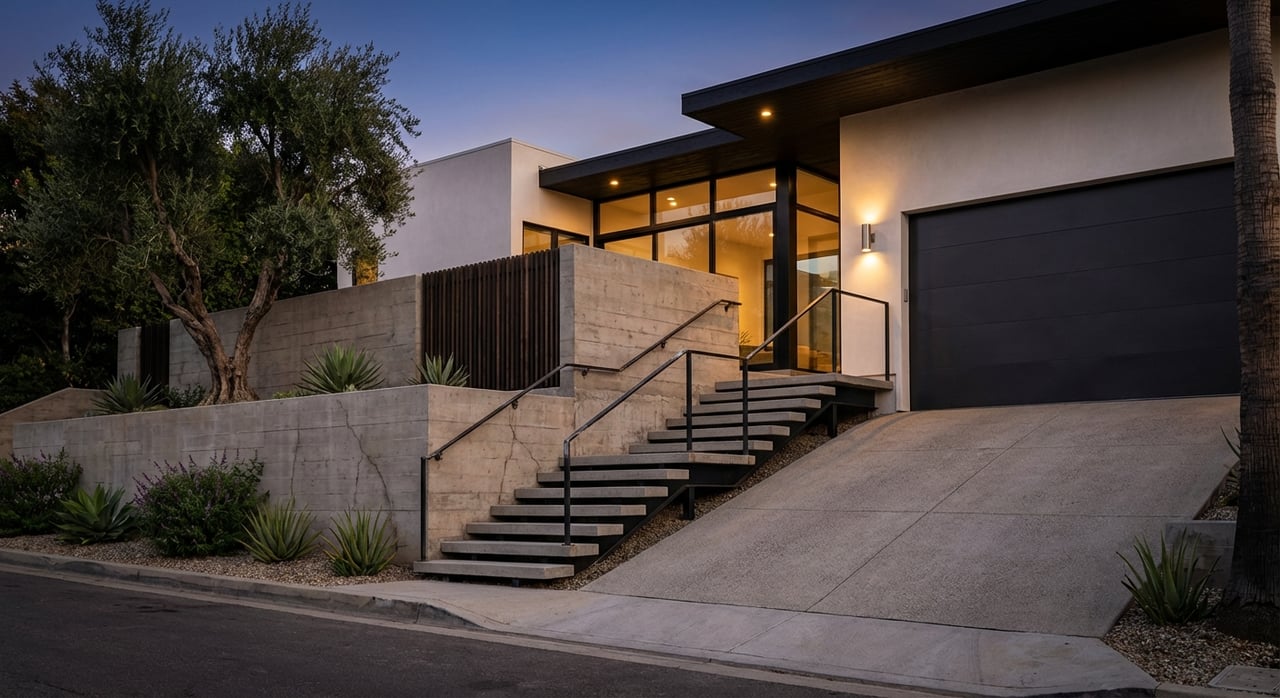
Hillside homes often use “reverse living” or split-level layouts. Garages sit at street level, while main living areas rise to catch the view. You will likely encounter multiple short flights, stepped decks, and terraces at different elevations. In higher-end remodels, you may see elevators to reduce daily stair counts, but you should plan for stairs as part of everyday circulation.
Parking and driveways
Steep private driveways and switchbacks are common, and garages may sit below the main living level. On-street parking can be tight on narrow roads or near trailheads. The City’s Residential Preferential Parking program lets designated blocks limit visitor parking and gives residents up to three annual permits per household, plus guest permits. If you are near a busy overlook or trail access, read posted restrictions and ask the seller about neighborhood rules.
Privacy, noise, and microclimate
Hillsides tend to feel more private because of trees, slope, and limited through-traffic. That said, you may hear trailhead activity at peak times, film activity along Mulholland, or wind on exposed ridgelines. Elevation also brings small temperature shifts. The standard atmospheric lapse rate shows a general cooling of roughly 3.5 degrees Fahrenheit per 1,000 feet, though shade, exposure, and marine influence change how it feels on a specific lot. If possible, test the home in the morning, midday, and at sunset so you know how it lives across the day.
Practical tradeoffs and protections
Permitting and hillside rules
Los Angeles applies special hillside standards through the Baseline Hillside Ordinance, which governs floor area, grading, setbacks, and access for parcels in designated Hillside Areas. Before you plan a major project, confirm whether these rules apply by checking the parcel and slope analysis tools that the city uses. You can learn more about the framework in the Baseline Hillside Ordinance overview. Expect more review than a flat-lot remodel.
Geotechnical and grading budgets
Most hillside projects require soils and geology review, and the Los Angeles Department of Building and Safety often needs a report and Grading Division approval before issuing permits. Typical private geotechnical inquiry costs for a residential hillside parcel commonly range from about $8,000 to $25,000, depending on the site. On difficult slopes, foundation, retaining, and earthwork can account for 15 to 25 percent of a project budget. Build time and budget for these steps. A helpful overview of scope and costs is here: foundation and geotechnical considerations.
Retaining walls and engineering
Even “small” walls can require permits and engineering. In Los Angeles, if a retaining wall is over about 4 feet in height measured from the footing to the top, it usually needs a permit and engineered plans. Learn more about typical hillside construction needs in this summary of retaining wall and hillside requirements.
Wildfire readiness and defensible space
Parts of the Studio City hills are mapped in High or Very High Fire Hazard Severity Zones. In those areas, new work may trigger ignition-resistant construction standards, and owners must maintain defensible space under state law. Review parcel status using the latest updates summarized by CAL FIRE and local agencies, including the 2025 map release for Los Angeles County in this FHSZ update overview. Then confirm brush clearance requirements with the LAFD’s owner guidance.
Insurance and disclosures
Insurance factors like wildfire mapping, slope and debris flow potential, and earthquake exposure can influence pricing and availability. Get quotes at the address level early rather than relying on averages. In California, sellers must provide a Natural Hazard Disclosure that calls out statutory hazard zones. If you do not see it in the disclosure packet, request it and consider independent reviews where needed.
How different hill pockets feel
Fryman Canyon and “upper” Studio City
North of Ventura between Laurel Canyon and Coldwater, you will find deeply treed streets, winding drives, and a canyon-like feel. Homes often sit behind long or gated drives with a strong emphasis on privacy. Proximity to Fryman trailheads makes morning loops part of the routine. Lots can be larger in select pockets, though parcel sizes vary.
Mulholland rim and overlooks
Close to the ridge, outlooks can feel cinematic, and you are very near Mulholland pullouts and the Nancy Hoover Pohl Overlook. The tradeoff is occasional visitor presence and parking turnover at popular scenic spots. If you value quiet evenings, visit at peak times to understand street activity.
Lower slopes near Ventura Boulevard
Closer to Ventura, day-to-day access is easier, with shorter driveways and quicker trips for dining and errands. View corridors can be more filtered by tree canopy and neighboring homes. You may trade some seclusion for convenience, which many buyers prefer for daily routines.
Touring checklist for hillside homes
Use this quick list to stress test a hillside listing before you write an offer.
- Visit at multiple times: weekday morning, weekend midday, and dusk. Crowds and parking near trailheads like Fryman can vary widely across the day, so you want the full picture. A local guide to Fryman’s rhythms is a useful reference at Modern Hiker’s Fryman overview.
- Confirm street and driveway width for fire and emergency access, and ask about any street-improvement or striping history. Larger remodels can intersect with the city’s hillside and roadway standards outlined in the Baseline Hillside Ordinance overview.
- Run the address through city planning tools like ZIMAS, check CAL FIRE’s Fire Hazard Severity Zone viewer using the 2025 FHSZ update overview, and review the LAFD brush clearance guidance. Request the seller’s Natural Hazard Disclosure.
- Ask for recent soils or geology reports, grading history, and permits for retaining walls and drainage. If they are missing, plan for a buyer-paid geotechnical review during contingency. This geotechnical overview explains typical scope and costs.
- Test parking realities: driveway grade, garage clearance for larger vehicles, and on-street limits. If you are near a trailhead or commercial strip, read the block’s Residential Preferential Parking rules and permit options.
- Obtain an early insurance quote that addresses wildfire and earthquake. Underwriting varies by parcel, and the FHSZ update overview explains how mapping informs risk.
Is Studio City hillside living right for you?
If you want a daily connection to nature, shadow-dappled streets, and a home designed around views, the Studio City hills deliver. You trade some driveway slope and stairs for privacy and trail access. You also take on technical due diligence that flat lots may not require, from soils reports to brush clearance. With the right checks and the right advisor, hillside living can become the most rewarding chapter of your Los Angeles life.
Ready to explore hillside homes or pressure test a property you already love? Let a local, technically minded advisor translate permits, grading, and hazard maps into clear decisions. Connect with Tina Dagent to map your next move. Schedule a free consultation.
FAQs
What areas count as “hillside” in Studio City?
- Generally, homes north of Ventura Boulevard that rise into the Santa Monica Mountains foothills are considered hillside, with winding streets, sloped lots, and access to Mulholland overlooks and Fryman Canyon Park.
How busy does it get near Fryman Canyon trailheads?
- Weekends can bring heavier foot traffic and fuller parking near trailheads and the Nancy Hoover Pohl Overlook, so check the block at peak times to gauge activity.
What permits apply if I remodel a hillside home in Los Angeles?
- Projects in designated Hillside Areas are guided by the city’s Baseline Hillside Ordinance, which limits grading and sets standards for floor area, setbacks, and access, as outlined in this city-focused overview.
How much should I budget for geotechnical work on a slope?
- Many residential hillside parcels need soils and geology reports, often ranging from about $8,000 to $25,000, and challenging sites can push foundation and earthwork to 15 to 25 percent of project cost per this geotechnical overview.
How do wildfire zones affect buying and insurance in the hills?
- Parcels mapped in High or Very High Fire Hazard Severity Zones can trigger ignition-resistant building standards and defensible-space rules, and insurers weigh multiple risk datasets, as summarized in the 2025 FHSZ update overview and the LAFD brush guidance.